
You hit the opener button and the door doesn't move the way it usually does. Maybe it hesitates for a second before lifting, or one side rises faster than the other, or there's a metallic groan you don't remember hearing last month. You stand there in the doorway for a second, waiting to see if it's a fluke. It usually isn't.
Garage door springs don't fail without warning. They wear down gradually, and the signs show up weeks or even months before a full break. Here's a checklist you can run through right in your own garage to catch the problem early, before you're the one stuck with a door that won't budge during a storm.
Walk the Checklist
1. Look at the spring itself (torsion springs, above the door)
If your door uses a torsion spring system, it's the single coiled spring mounted horizontally on a metal shaft just above the door opening. Look for a visible gap in the coils. A healthy torsion spring sits tight, coil against coil. A gap of half an inch or more usually means the spring has already fractured and is just hanging on by habit. What it means if it fails: the spring stops providing lift entirely, and the door becomes too heavy to open safely by hand or by opener.
2. Check extension springs for stretch or separation
If your springs run along the horizontal tracks on either side of the door instead, you've got extension springs. Look at the coil spacing along the full length. Uneven stretching, especially a section where the coils look pulled apart compared to the rest, is a sign the spring has lost tension and is being overworked. What it means if it fails: one side of the door loses support faster than the other, which is why doors with worn extension springs often tilt or hang crooked when they're halfway open.
3. Look for rust and flaking on the coils
In Jackson County's humidity, and especially after a stretch of afternoon downpours, moisture gets into garage spaces more than most homeowners realize. Rust on a spring isn't just cosmetic. It eats into the metal and creates weak points where the coil is more likely to snap under tension. What it means if it fails: rusted springs tend to break suddenly rather than gradually, often with the loud bang homeowners describe as sounding like a gunshot.
4. Lift the door manually (with the opener disconnected)
Pull the release cord so the opener is disengaged, then lift the door by hand about halfway. A door with healthy springs should feel relatively light and should stay in place when you let go. If it feels heavy, drops on its own, or you have to fight it the whole way up, the springs are no longer carrying their share of the weight. What it means if it fails: the opener motor starts doing a job it wasn't built to do alone, which shortens its lifespan too.
5. Watch how evenly the door travels
Stand to the side and watch a full open-and-close cycle. The door should move smoothly and stay level the entire way. Jerking, pausing, or visibly dipping on one side partway through the cycle points to uneven spring tension, usually one spring doing more work than its partner. What it means if it fails: the imbalance puts extra strain on cables, rollers, and tracks, which can turn a spring problem into an off-track problem.
6. Listen for new sounds during operation
Every garage door has its normal sound. A new squeak, grind, or a sharp metallic pop during the cycle is worth paying attention to. A single loud bang followed by the door refusing to open fully is the classic sign of a spring that has already broken. What it means if it fails: once a spring snaps, the door is effectively locked in place until it's replaced. This isn't a wait-and-see repair.
7. Check the cables near the bottom drums
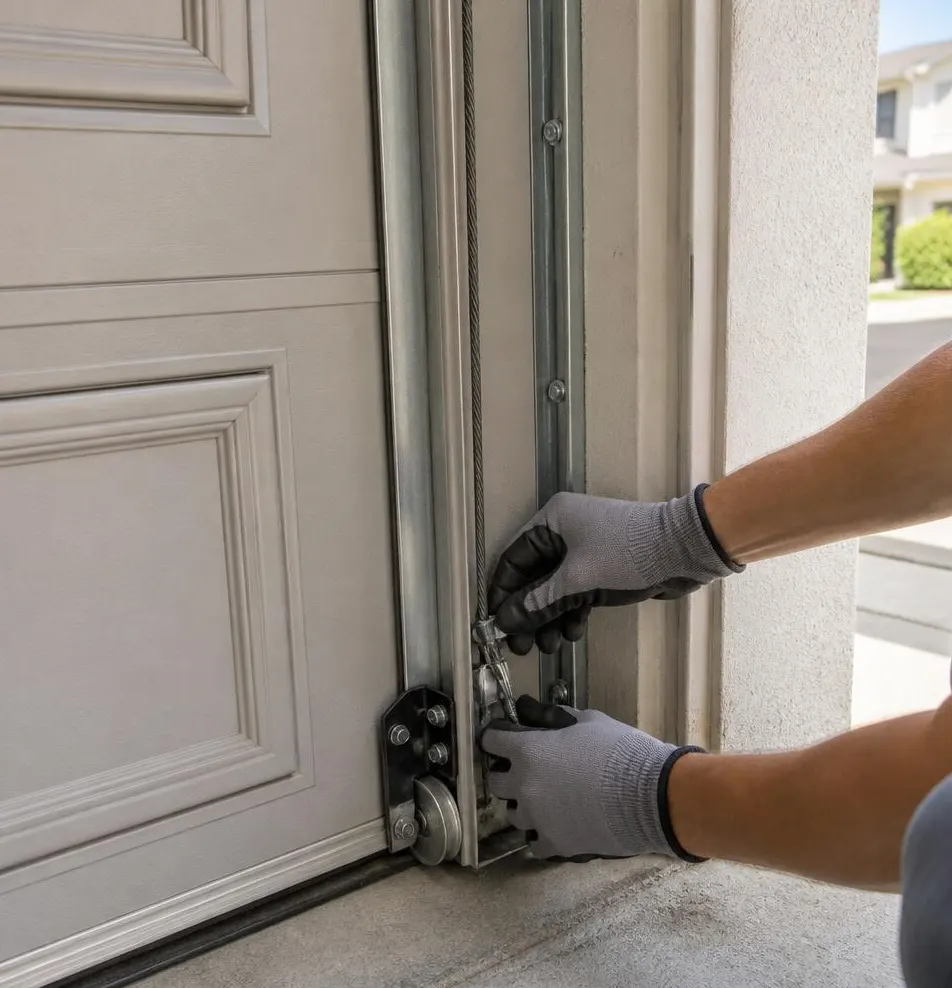
Springs and cables work together, so a failing spring often shows up first as slack or fraying in the cables near the bottom of the tracks. If you see a cable that looks loose, frayed, or slightly off its drum, the spring tension feeding it is likely already off. What it means if it fails: a snapped cable under load can whip loose and cause real damage, so this one is worth flagging immediately rather than waiting.
Why This Matters More Heading Into Winter Storm Season
Springs under strain already don't need much to push them over the edge, and the humidity and temperature swings common in this part of Florida speed up metal fatigue and rust. A door that's working overtime on a weakened spring is also a door that's less reliable if wind-load stress hits it during a storm. Catching wear now, while it's still a repair and not an emergency, is the cheaper and safer route.
When to Call Greenwood Garage Door
If you've gone through this checklist and found a gap in the coils, visible rust, uneven lift, or a door that feels heavier than it should, it's time to call in a professional rather than attempt a spring swap yourself. Torsion and extension springs are under serious tension and have caused real injuries to homeowners who tried to replace them without the right tools. Greenwood Garage Door handles Garage Door Spring Repair for both torsion and extension systems, and if it's been a while since your last checkup, a Garage Door Maintenance & Tune-Up will catch early wear on springs, cables, and rollers before any of it turns into a Saturday morning emergency.
If your garage door in Greenwood, FL is showing any of these signs, give Greenwood Garage Door a call. We serve Greenwood and the surrounding Jackson County area, and we'd rather replace a worn spring on a Tuesday than get you unstuck after it breaks.